General Readings in Computing Science (MSc(CS), MSc(IT)): This year-long course covers papers of general interest which discussed with the class each week: the papers and assessment material are available on Moodle. The course co-ordinator for the second semester only in 2008/9 is Paul Cockshott.
Information Management (level 2): This course covers techniques in managing and presenting information, in the context of the potential uses of an information system. The course demonstrates the ways of building information systems, from data repository design to presentation to users, and contrasts the content of the information being managed with the methods of managing it and the ways of presenting it to users.
Human Computer Interaction (level 1, as part of CS1Q): This course covers the main aspects of HCI: users, interfaces and interaction, as well as the process of design and evaluation in an iterative process. Some special interest topics are also addressed (for example, CSCW and Information Visualisation).
Research Readings in Computing Science (MSci, MRes): This first-semester course covers 11 Computing Science research topics, one a week for 11 weeks. The sessions revolve around discussion of four seminal research papers in the topic and are led by topic specialists as well as by students. The course co-ordinator in 2008/9 is Simon Gay. The papers and assessmetn guidelines are available on Moodle.
Advanced Research Readings in Computing Science (MSci, MScRes): This second-semester course is run in small groups, each group covering one of the eleven topics introduced in RRCS, thus allowing students to concentrate on the topics that interest them. Like RRCS, the meetings revolve around the discussion of research papers, and are led by one or more lecturers from the relevant research group. The course co-ordinator in 2008/9 is Iadh Ounis.
User Centered Software Design
(MScIT): This module presents key knowledge needed for the design, implementation
and evaluation of effective user interfaces. The lecture material covers theoretical
topics and principles of interative design, while the lab sessions are 'studio-based',
with students actively engaged in their own design project. [This course is not running at present]
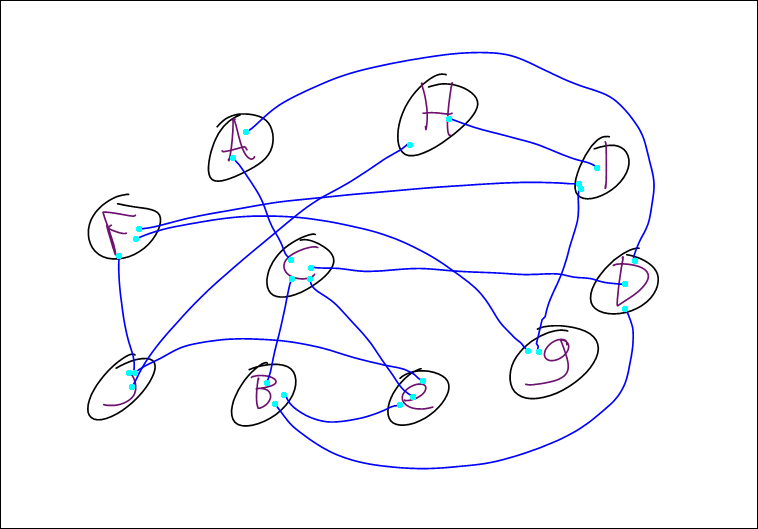
Professional Software Development (MSc(IT), MSc(CS)): This module covers techniques required for building large software systems (including requirements, analysis, design, testing and evaluation), and the management of software projects. The course co-ordinator is Phil Gray. The Edge Project: Effectiveness of Graph Layout Algorithms: This project investigates
the effectiveness (from a human usability point of view) of automatic graph
layout algorithms, which are usually valued for their computational efficiency,
or the extent to which they conform to common aesthetic criteria (e.g.:
minimising the number of edge crossings, maximising symmetrical displays).
Usability of Software Engineering
diagrams and presentation: This project is an extension of the one above,
where the graphs under consideration are those used in software engineering
applications (for example, UML diagrams, entity-relationship diagrams). Usability
studies are used to establish the usefulness (from a human comprehension perspective)
of both the notation and layout of these diagrams.
Multimedia models: This project
used ideas and terminology from the field of semiotics to define an unambiguous
model of multimedia communication (along the dimensions of sign, syntax
and modality), which has been empirically evaluated for its understandability.
Computer Science Education (Higher
Education): This action learning project investigated the
use of novel learning activities that encourage students to accept the fact
that there may be multiple solutions to a single problem, and that their own
solutions (and those of their peers) can contribute to their learning. New project on integrating PDP and "Contributing Student activities" within taught courses is ongoing.
Previous postgraduate students:
Usability of Grammar Formalisms
for free and fixed-word order languages (Mark Pedersen, The University of
Queensland): Mark investigated different grammar formalisms (DG, PSG and
LFG) for the suitability for representing free-word order in Hindi and English.
Usability studies were conducted to determine the relative effectiveness of
these grammar formalisms.
Electronic Blocks (Peta Wyeth,
The University of Queensland): Peta defined and implemented electronic
blocks suitable for children between the ages of 3 and 8 which enable a simple
form of programming using input, output and logic blocks.
The use of these blocks was evaluated with pre-school and primary school children.
Publications:
Purchase, H.C., Andrienko, N., Jankun-Kelly, T.J., and Ward, M.Theoretical Foundations of Information Visualization. In Kerren, A., Stasko,J.T., Fekete J-D., and Chris North C. (eds.). Information Visualization – Human-Centered Issues and Perspectives. Volume 4950 of LNCS State-of-the-Art Survey, Springer, 2008.
Journal Articles
Hamer, J., Cutts, Q., Jackova, J., Luxton-Reilly, A., McCartney, R., Purchase, Riesdel, C., H., Saela, M, and Sheard, J. Contributing Student Pedagogy. SIGSCE Bulletin, December 2008, vol 40(4), pp 196-214.
Conference Papers
Denny, P., Hamer, J., Luxton-Reilly, A. and Purchase, H.C. PeerWise. 8th Koli Calling International Conference on Computing Education Research, 2008.
Purchase, H.C., Evaluating Graph Drawing
Aesthetics: defining and exploring a new empirical research area, Computer
Graphics and Multimedia: Applications, Problems and Solutions, DiMarco,
J. (ed), Idea Group Publishing, pp 145-178, 2004.
Purchase, H.C., Colpoys, L., Carrington,
D., and McGill M. UML Class Diagrams: An Empirical Study of Comprehension. Software Visualization
- From Theory to Practice, Zhang, K. (ed), Kulwer, pp 149-178, 2003.
Purchase, H.C. and Naumann, D., A Semiotic
Model of Multimedia: Theory and Evaluation, Design and Management of
Multimedia Information Systems: Opportunities and Challenges, Rahman,
S.M. (ed)., Idea Group Publishing, pp1-21, 2001.
Purchase, H.C., Informationally Equivalent
Representations: An architecture and applications, Perspectives on Cognitive
Science, vol II: Theories, experiments, and foundations, Wiles, J.
and Dartnall, T. (eds), Ablex, 1999.
Burmeister, J. and Wiles, J. and Purchase,
H.C., The integration of cognitive knowledge into a perceptual representation:
Lessons from Human and Computer Go, Perspectives on Cognitive Science,
vol II: Theories, experiments, and foundations, Wiles, J. and Dartnall,
T. (eds), Ablex, 1999.
Bradshaw, J.A. and Purchase, H.C. et
al, Three ecological applications in P.R.O, Expert system Applications,
Vadera, S.(ed), Sigma press, 1989.
Holz, H., Applin, A., Haberman, B., Joyce, D., Purchase, H. and Reed, C. Research Methods in Computing: What are they, and how should we teach them? SIGCE Bulletin, December 2006, vol 38(4), pp96-114.
Purchase, H.C. Student Compliace with Ethical Guidelines: The Glasgow Ethics Code.
ITALICS , Steede H., and O'Reilly U. (eds), HEA (Information and
Computer Sciences), May 2006, vol 5(2).
Purchase, H.C., Welland, R., McGill, M and Colpoys, L. Comprehension of diagram syntax:
an empirical study of Entity Relationship Diagram notations. International
Journal of Human-Computer Studies, 61(2), pp187-203, 2004.
Ware, C., Purchase, H.C., Colpoys, L. and McGill, M. Cognitive Measurements of Graph
Aesthetics, Information Visualization, 1(2), pp 103-110, 2002.
Wyeth, P., and Purchase, H. Designing Technology for Children:
Moving from the Computer into the Physical World with Electronic Blocks,
Information Technology in Childhood Education Annual, 1, pp 219-244, 2002.
Purchase, H.C., Carrington, D.A. and
Allder J-A. Graph Layout Aesthetics in UML diagrams: User Preferences,
Journal
of Graph Algorithms and Applications, 6(3), pp 255-279, 2002.
Purchase, H.C. Metrics for Graph Drawing
Aesthetics, Journal of Visual Languages and Computing, 13 (5), pp501-516,
2002.
Purchase, H.C. and Worrill, J. An Empirical
Study of Online Help Design: Features and Principles, International
Journal of Human Computer Studies, 56(5), pp 539-567, 2002.
Purchase, H.C., Carrington, D.A. and
Allder J-A. Empirical evaluation of aesthetics-based graph layout, Empirical
Software Engineering, 7(3), pp233-255, 2002.
Wyeth, P.A. and Purchase, H.C., Exploring
the Learning Potential of an Artificial Life Simulation, International
Journal of Continuing Engineering Education and Life-long Learning,
11(3), pp229-241, 2001.
Purchase, H.C., Learning about Interface
Design through Peer Assessment, Assessment and Evaluation in Higher
Education, 25(4), pp341-352, 2000.
Purchase, H.C., Effective information
visualisation: a study of graph drawing aesthetics and algorithms, Interacting
with Computers, 13(2), pp 477-506, 2000.
Dia, H. and Purchase, H.C., Modelling
the impacts of advanced traveller information systems using intelligent
agents, Road and Transport Research, 8(3), 1999.
Purchase, H.C., A Semiotic Definition
of Multimedia Communication, Semiotica, vol 123-3/4, pp 247-259,
March, 1999.
Purchase, H.C., Performance of Layout
Algorithms: Comprehension, not Computation, Journal of Visual Languages
and Computing, 9, pp 647-657, 1998.
Purchase, H.C., Defining Multimedia,
IEEE
Multimedia, 5(1), pp 8-15, 1998.
Purchase, H.C., Cohen, R.F. and James,
M., An Experimental Study of the Basis for Graph Drawing Algorithms, ACM
Journal of Experimental Algorithmics, 2(4), 1997.
Denny, P., Luxton-Reilly, A., Hamer, J and Purchase, H.C. PeerWise: Students Sharing their Multiple Choice Questions. Proceedings of the Fourth International Computing Education Research Workshop, 2008, pp51-58.
Purchase, H.C., and Samra, A. Extremes Are Better: Investigating Mental Map Preservation in Dynamic Graphs. Diagrams 2008, LNAI 5223, pp. 60–73, 2008.
Saffrey, P. and Purchase, H.C. The 'Mental Map' versus 'Static Aesthetic' Compromise in Dynamic Graphs: A User Study. Proceedings of 9th Australasian User Interface Conference, pp85-93, 2008.
Reid, P., Hallet-Hook, F., Plimmer, B. and Purchase, H.C. Applying Layout Algorithms to Hand-drawn graphs. Proceedings of the 19th Australasian conference on Computer-Human Interaction, 2007, pp203-206.
Purchase, H.C., Hoggan, E. and Görg, C. How Important is the "Mental Map"? - an Empirical Investigation of a Dynamic Graph Layout Algorithm. Proceedings of 14th International Symposium on Graph Drawing, 2006.
Brown,
L.M., Brewster, S.A., and Purchase, H.C. A First Investigation into the Effectiveness
of Tactons, in Proceedings of World Haptics 2005, Pisa, Italy.
Purchase,
H.C., Mitchell, C., and Ounis, I., Gauging Students'
Understanding Through Interactive Lectures, Proceedings
of BNCOD 21, Williams, H. and McKinnon L. (eds), Lecture notes in Computer
Science 3112, pp 234-243, Springer Verlag, 2004.
Wyeth, P. and Purchase, H.C., Using Developmental Theories to
Inform the Deisgn of Technology for Children,
Small Users - Big
Ideas: Proceedings of Interaction Design and Children,
pp 93-100, ACM, 2003.
Purchase, H., Welland R., McGill, M. and Colpoys, L.,
Comprehension of Diagram Syntax: an empirical study of Entity Relationship Notations,
Proceedings of the Joint Ease/PPIG conference,
pp 213-231, 2003.
Carrington, D., Colpoys, L., McGill,
M. and Purchase, H., Experimenting with Layout and Notation in UML Diagrams,
International Symposium on Empirical Software Engineering vol. II,
pp 9-10, IEEE, 2002.
Wyeth, P.A. and Purchase, H.C. Tangible
Programming Elements for Young Children, Proceedings of the CHI conference,
Comstock, B. and Sasse, M.A. (eds), p774-5, ACM, 2002.
Purchase, H.C., Colpoys, L., McGill,
M. and Carrington, D. UML collaboration diagram syntax: an empirical
study of comprehension, Proceedings of the First International Workshop
of Visualizing Sofware for Understanding and Analysis, Knight, C.,
Storey M-A. and Munro, M. (eds), pp13-22, IEEE, 2002.
Purchase, H.C., Colpoys, L., McGill,
M., Carrington, D. and Britton, C. UML class diagram syntax: an empirical
study of comprehension, Proceedings of the Australian Symposium on Information
Visualisation, Eades, P. and Pattison, T. (eds), Australian Computer
society, pp113-120, 2001.
Purchase, H.C., McGill, M., Colpoys,
L. and Carrington, D. Graph drawing aesthetics and the comprehension of
UML class diagrams: an empirical study, Proceedings of the Australian
Symposium on Information Visualisation, Eades, P. and Pattison, T.
(eds), Australian Computer society, pp129-137, 2001.
Purchase, H.C. and Allder, J-A. and Carrington,
D., User preference of Graph Layout Aesthetics: a UML study, Proceedings
of the Graph Drawing symposium, Marks, J. (ed), Lecture notes in Computer
Science 1984, Springer Verlag, 2000.
Purchase, H.C. and Carrington, D. and
Allder, J-A., Experimenting with aesthetics-based graph layout, Proceedings
of the Theory and Application of Diagrams conference, Anderson, M.
and Cheng, P. and Haarslev, V. (eds), Lecture notes in Artificial Intelligence
1889, Springer Verlag, 2000.
Purchase, H.C. and Naumann, D., The TOMUS
Model of Multimedia: an empirical investigation, Proceedings of the
World Conference on Educational Multimedia, Hypermedia and Telecommunications,
Bordeau, J. and Heller, R. (eds), Association for the Advancement of Computing
in Education, 2000.
Wyeth, P.A. and Purchase, H.C., Programming
without a Computer: A new interface for children under eight, Proceedings
of the first Australasian User Interface Conference, IEEE, 2000.
Purchase, H.C., Peer Assessment: Encouraging
Reflection on Interface Design, Proceedings of Australasian Computer
Science Conference, IEEE, 2000.
Wyeth, P. A. and Purchase, H.C., Exploring
the Learning Potential of an Artificial Life simulation, Proceedings
of the Ninth International PEG Conference, University of Exeter, 1999.
Wyeth, P. A. and Purchase, H.C., Developmentally
Appropriate Learning: Implications for Early Childhood Technology Education,
Proceedings
of the Ninth International PEG Conference, University of Exeter, 1999.
Purchase, H.C., The Effects of Graph
Layout, Proceedings of the OzCHI Conference, IEEE Computer Society,
1998
Purchase, H.C., Hussey, A., Brookes,
W., Leadbetter, D., Fostering interest in Information Technology: running
a vacation school for pre-university students, Proceedings of the Second
Australasian Conference on Computer Science Education, Hurst, J. (ed),
ACM Press, 1997.
Hussey, A., Leadbetter, D. and Purchase,
H.C., Learning Object-Oriented Programming in Six hours: an experience
with school students, Proceedings of the Second Australasian Conference
on Computer Science Education, Hurst, J.(ed)., ACM Press, 1997.
Purchase, H.C., Multimedia Communication
and Technology: a Semiotic Perspective, Proceedings of HCI International,
Smith, M., Salvendy, G. and Koubek, R.J., Elsevier Science, 1997.
Purchase, H.C., Which aesthetic has the
greatest effect on human understanding?, Proceedings of Graph Drawing
Symposium, Di Battista, G. (ed), Lecture Notes in Computer Science
1353, Springer-Verlag, 1997.
Strooper, P., Bakker, P., Carrington,
D., Creasy, P., Goodchild, A., MacColl, I. And Purchase, H.C., Setting
Up a Tutor Training Programme in Computer Science, Proceedings of the
First Australian Conference on Computer Science Education, Rosenberg,
J. (ed), ACM Press, 1996.
Pedersen, M. and Purchase, H.C., Pragmatics
versus Purism - taking the best of both worlds, Proceedings of the PRICAI-96
Workshop on Future Issues for Multi-lingual Text Processing, Estival,
D. and Dale, R. (eds),Griffith University, 1996.
Purchase, H.C. and Kennish, J.M., Gloss:
interactive navigation of lexical space, Proceedings of the Asia-Pacific
conference on Human Computer Interaction, Yong, L.K., Herman, L., Leung,
Y.K. and Moyes, J. (eds), Information Technology Institute, National Computer
Board of Singapore, 1996.
Purchase, H.C., Cohen, R.F. and James,
M., Validating Graph Drawing Aesthetics, Proceedings of Graph Drawing
Symposium, Brandenburg,F. (ed), Lecture Notes in Computer Science,
1027, Springer-Verlag, 1995.
Bakker, P., Carrington, D., Goodchild,
A., Hayes, I.,Purchase H.C. and Strooper P., The communicating technologist:
An educational challenge, Frontiers in Education 25th Annual Conference,
Budny D. and Herrick B. (eds), IEEE Press, 1995.
Purchase, H.C., Interactive schematic
representation systems and related research issues, Proceedings of the
International Conference on Computers in Education, Jonassen, D. and
McCalla, G. (eds), Association for the Advancement of Computers in Education,
1995.
Purchase, H.C., Computers as interactive
representational devices for declarative domains, Proceedings of the
World conference on Educational Multimedia and Hypermedia, Ottman,
T. and Tomek, I. (eds), Association for the Advancement of Computers in
Education, 1994.
Purchase, H.C., A schematic knowledge-based
educational system and its use in investigating symbolic processing, structural
envisagement, and reflective skills, Proceedings of the World conference
on Artificial Intelligence in Education, Brna, P., Ohlsson, S. and
Pain, H. (eds), Association for the Advancement of Computers in Education,
1993.
Purchase, H.C., Kreek : Investigating
pre-adolescent symbolic, structural envisagement, and reflective skills,
Proceedings
of the Seventh International PEG conference on AI tools and the classroom:
theory into practise, Moray House Institute of Education, Heriot Watt
University, 1993.
Purchase, H.C. and Robinson, C.B., Kreek
: Knowledge presentation, expression and enquiry, Proceedings of the
Sixth International PEG conference on Knowledge based environments for
teaching and learning, Bottino, R.M.,Forcheri, P. and Molfino, M.T.
(eds), Instituo per la Matematica Applicata, 1991.
Purchase, H.C. and Robinson, C.B., Design
issues for a knowledge-based educational system, Proceedings of the
5th World conference on Computers in Education, McDougall, A. and Dowling,
C. (eds), International Federation of Information Processing, 1990.